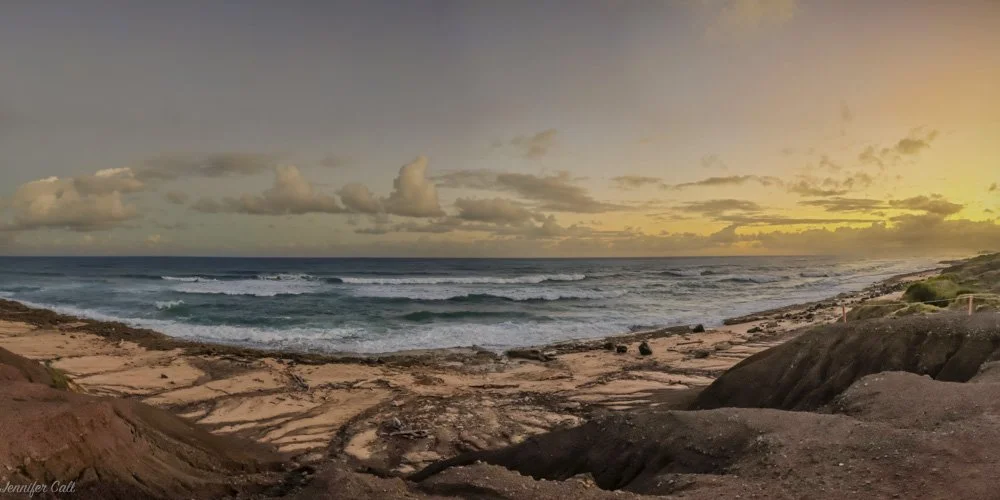
This is the shoreline on the north side of Kaʻena Point.
I recommend putting on your geologist hat and walking this shore. Pay attention to the story unfolding in the colluvial deposits coming down from the ridgeline and the exposed fossil coral reef along the coastal trail, some 25 feet above the high-tide line.
This shoreline was once underwater during Earth's last interglacial warm period, approximately 120,000 to 125,000 years ago.
But the ocean didn't shape this landscape only then. Oʻahu preserves evidence of several ancient reef-building periods, including one roughly 190,000 to 245,000 years ago and another perhaps 400,000 to 500,000 years ago.
Looking at the fossilized reef under my feet, I could not distinguish between these periods. Ancient reefs have been exposed, eroded, buried, and sometimes reworked by the ocean. Scientists have used fossil corals and geological dating techniques to help sort out the different periods.
Given the sheer number of ancient shells, coral fossils, and other marine remains preserved in the ancient reef, snorkeling there must have been spectacular.
Next time you hike Kaʻena Point, take some time to look down. A lot of history lies beneath your feet.
A little geology that I recently learned:
Colluvial deposits are rocks, soil, and other material that move downhill primarily through gravity, often collecting at the base of slopes.
Alluvial deposits are materials transported and deposited by flowing water, such as streams and rivers.
Both can occur along this coastline, but the material moving down the steep slopes is often best described as colluvial.